
Pull up normal grip
Pull up normal grip: step-by-step technique with video, the muscles it works and tips to get it right.
8 variations of this exercise on this page.
Create my coach spaceWatch the exercise


How to do it, step by step
- Stand beneath a pull-up bar and grasp it with an overhand grip (palms facing away from you), hands slightly wider than shoulder-width apart.
- Engage your back muscles and pull yourself up towards the bar by bending your elbows.
- Continue pulling until your chin is above the bar, focusing on contracting your back muscles.
- Lower yourself back to the starting position in a controlled manner, fully extending your arms. Repeat for the desired number of repetitions.
Tips
- Use a full range of motion, fully extending your arms at the bottom and pulling up until your chin is above the bar.
- Focus on engaging your back muscles, particularly the latissimus dorsi, to perform the pull-up effectively.
- Breathe steadily, exhaling as you pull up and inhaling as you lower yourself down.
- Avoid using momentum to swing your body; maintain a controlled movement throughout the exercise.
- Perform the exercise on a stable, secure pull-up bar to ensure safety.
Muscles and equipment
- Main muscle: Lats
- Other muscles worked: biceps, shoulders, traps
- Equipment: Other equipment
In the Elevo app
Every exercise has its own page: an illustration of the movement, the muscles worked and the history of your weights and personal records.
Create my coach space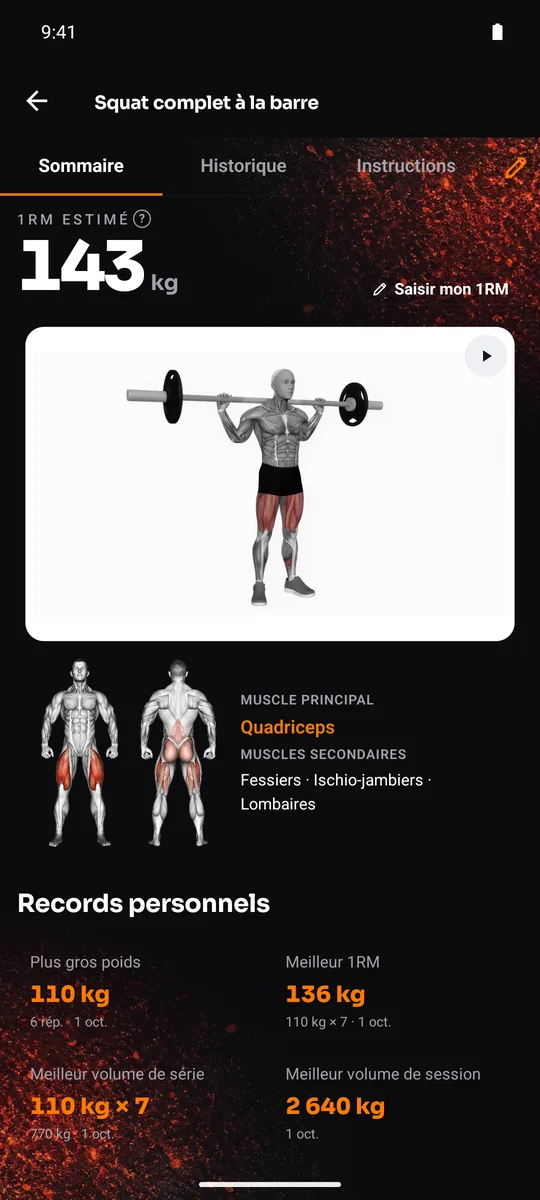
Variations
The same movement with different equipment, grip or angle.
Archer pull upOther equipment
- Hang from a pull-up bar with your hands positioned wider than shoulder-width apart.
- Pull yourself up towards the bar while simultaneously shifting your body to the right, bringing your chest closer to your right hand.
- Lower yourself back to the starting position.
- Pull yourself up again, this time shifting your body to the left, bringing your chest closer to your left hand. Continue alternating sides.
Tips
- Focus on using your back muscles rather than relying solely on your arms for the pull-up.
- Keep your elbows slightly bent throughout the movement to reduce strain on your joints.
- Ensure a full range of motion by fully extending your arms at the bottom of each rep and bringing your chest close to the bar at the top.
Chin upOther equipment
- Begin by grasping a pull-up bar with an underhand grip (palms facing you) and your hands shoulder-width apart. Hang with your arms fully extended and your legs slightly bent or crossed behind you.
- Engage your core and pull your shoulder blades down and back to start the movement.
- Pull your body upward by bending your elbows and contracting your biceps, continuing until your chin is above the bar.
- Lower yourself back to the starting position with a controlled movement, fully extending your arms. Repeat for the desired number of repetitions.
Tips
- Focus on using your biceps and back muscles to lift your body, avoiding excessive momentum.
- Perform the movement slowly and with control, especially during the lowering phase, to maximize muscle activation and prevent injury.
- Ensure your shoulders remain down and away from your ears to avoid unnecessary strain.
- Breathe steadily throughout the exercise, exhaling as you pull up and inhaling as you lower yourself.
- Use a full range of motion by fully extending your arms at the bottom and bringing your chin above the bar at the top.
Chin up (isometric and negative)Other equipment
- Begin by grasping a pull-up bar with an underhand grip (palms facing you) and your hands shoulder-width apart. Hang with your arms fully extended and your legs slightly bent or crossed behind you.
- Engage your core and pull your shoulder blades down and back to start the movement.
- Pull your body upward by bending your elbows and contracting your biceps, continuing until your chin is above the bar. Hold this top position (isometric hold) for a specified duration.
- After the hold, slowly lower yourself back to the starting position (negative phase), taking about 3-5 seconds to fully extend your arms. Repeat for the desired number of repetitions.
Tips
- Focus on using your biceps and upper back muscles to lift your body, avoiding excessive momentum.
- Perform the isometric hold with control, ensuring your muscles are engaged and you are not simply hanging from the bar.
- During the negative phase, lower yourself slowly and with control to maximize muscle activation and prevent injury.
Chin up reverse close gripOther equipment
- Begin by grasping a pull-up bar with a close underhand grip (palms facing you) and your hands placed closer than shoulder-width apart. Hang with your arms fully extended and your legs slightly bent or crossed behind you.
- Engage your back and start pulling your body upward by bending your elbows and contracting your biceps, continuing until your chin is above the bar.
- Lower yourself back to the starting position with a controlled movement, fully extending your arms. Repeat for the desired number of repetitions.
Tips
- Focus on using your biceps and upper back muscles to lift your body, avoiding excessive momentum.
- Perform the movement slowly and with control, especially during the lowering phase, to maximize muscle activation and prevent injury.
- Ensure your shoulders remain down and away from your ears to avoid unnecessary strain.
- Breathe steadily throughout the exercise, exhaling as you pull up and inhaling as you lower yourself.
- Use a full range of motion by fully extending your arms at the bottom and bringing your chin above the bar at the top.
Chin up reverse normal gripOther equipment
- Begin by grasping a pull-up bar with an underhand grip (palms facing you) and your hands shoulder-width apart. Hang with your arms fully extended and your legs slightly bent or crossed behind you.
- Engage your core and pull your shoulder blades down and back to start the movement.
- Pull your body upward by bending your elbows and contracting your biceps, continuing until your chin is above the bar.
- Lower yourself back to the starting position with a controlled movement, fully extending your arms. Repeat for the desired number of repetitions.
Tips
- Focus on using your biceps and back muscles to lift your body, avoiding excessive momentum.
- Perform the movement slowly and with control, especially during the lowering phase, to maximize muscle activation and prevent injury.
- Ensure your shoulders remain down and away from your ears to avoid unnecessary strain.
- Breathe steadily throughout the exercise, exhaling as you pull up and inhaling as you lower yourself.
- Use a full range of motion by fully extending your arms at the bottom and bringing your chin above the bar at the top.
Chin up reverse wide gripOther equipment
- Begin by grasping a pull-up bar with an underhand grip (palms facing you) and your hands placed wider than your shoulder-width. Hang with your arms fully extended and your legs slightly bent or crossed behind you.
- Engage your core and pull your shoulder blades down and back to start the movement.
- Pull your body upward by bending your elbows and contracting your biceps, continuing until your chin is above the bar.
- Lower yourself back to the starting position with a controlled movement, fully extending your arms. Repeat for the desired number of repetitions.
Tips
- Focus on using your biceps and back muscles to lift your body, avoiding excessive momentum.
- Perform the movement slowly and with control, especially during the lowering phase, to maximize muscle activation and prevent injury.
- Ensure your shoulders remain down and away from your ears to avoid unnecessary strain.
- Breathe steadily throughout the exercise, exhaling as you pull up and inhaling as you lower yourself.
- Use a full range of motion by fully extending your arms at the bottom and bringing your chin above the bar at the top.
Chin ups (narrow parallel grip)Other equipment
- Begin by grasping a pull-up bar with a narrow parallel grip (palms facing each other) and your hands close together. Hang with your arms fully extended and your legs slightly bent or crossed behind you.
- Engage your core and start pulling your body upward by bending your elbows and contracting your biceps, continuing until your chin is above the bar.
- Lower yourself back to the starting position with a controlled movement, fully extending your arms. Repeat for the desired number of repetitions.
Tips
- Focus on using your biceps and back muscles to lift your body, avoiding excessive momentum.
- Perform the movement slowly and with control, especially during the lowering phase, to maximize muscle activation and prevent injury.
- Ensure your shoulders remain down and away from your ears to avoid unnecessary strain.
- Breathe steadily throughout the exercise, exhaling as you pull up and inhaling as you lower yourself.
- Use a full range of motion by fully extending your arms at the bottom and bringing your chin above the bar at the top.
Pull up wide gripOther equipment
- Stand beneath a pull-up bar and grasp it with an overhand grip (palms facing away from you), hands wider than shoulder-width apart.
- Engage your back muscles to pull yourself up towards the bar by bending your elbows.
- Continue pulling until your chin is above the bar, focusing on contracting your back muscles.
- Lower yourself back to the starting position in a controlled manner, fully extending your arms. Repeat for the desired number of repetitions.
Tips
- Use a full range of motion, fully extending your arms at the bottom and pulling up until your chin is above the bar.
- Focus on engaging your back muscles, particularly the latissimus dorsi, to perform the pull-up effectively.
- Breathe steadily, exhaling as you pull up and inhaling as you lower yourself down.
- Avoid using momentum to swing your body; maintain a controlled movement throughout the exercise.
- Perform the exercise on a stable, secure pull-up bar to ensure safety.
Common questions
Which muscles does this exercise work?
The main muscle is the lats. It also works the biceps, shoulders and traps.
Do I need equipment?
Yes: Other equipment.
What variations are there?
Archer pull up, Chin up, Chin up (isometric and negative), Chin up reverse close grip, Chin up reverse normal grip, Chin up reverse wide grip, Chin ups (narrow parallel grip), Pull up wide grip.